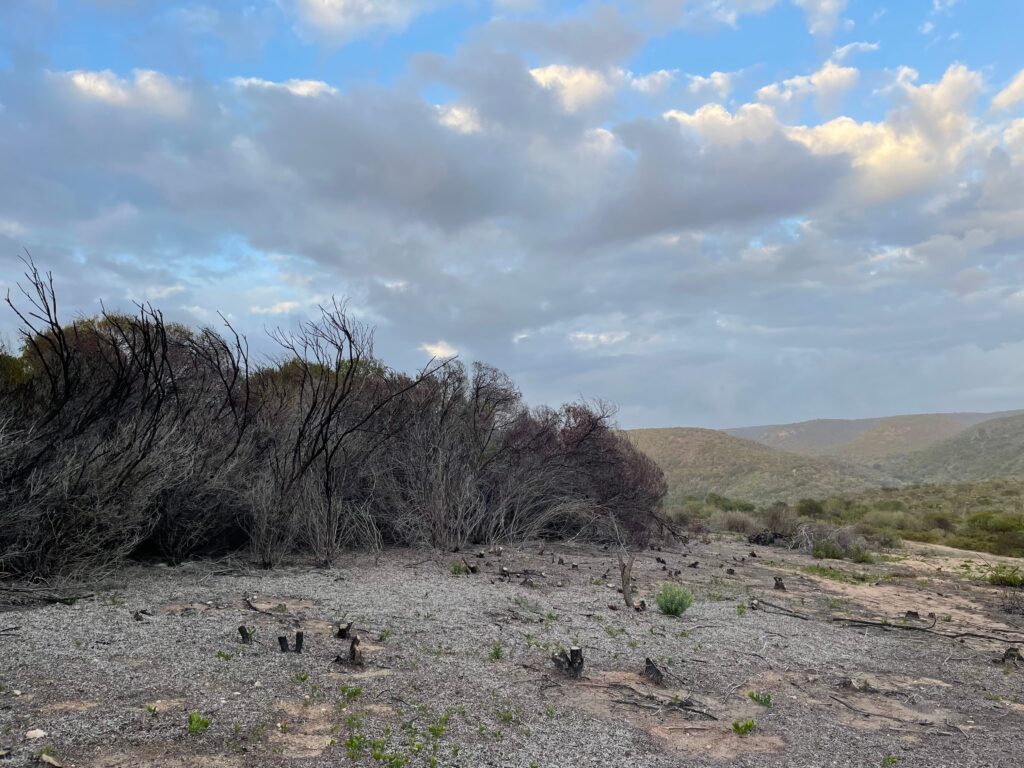
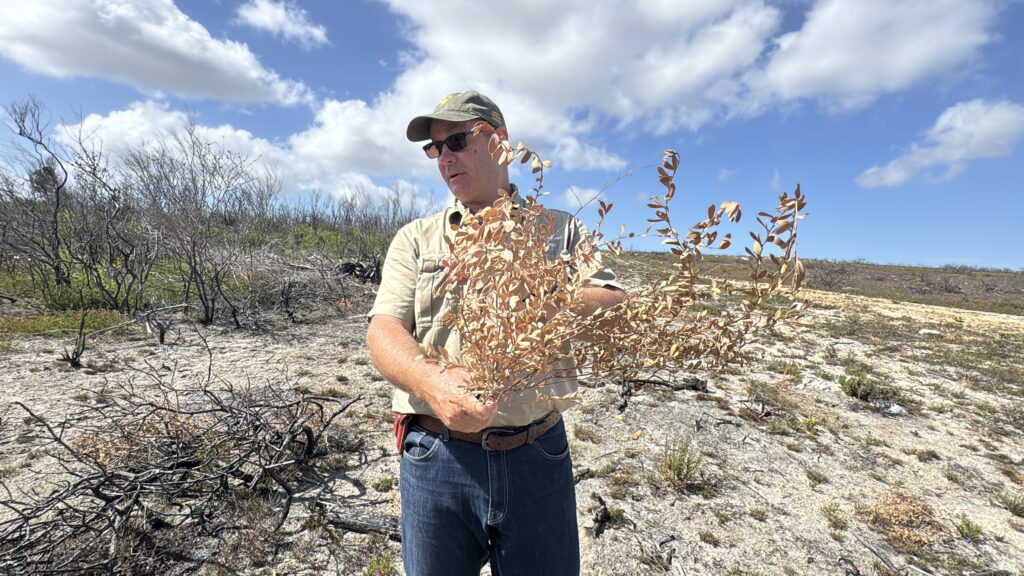
In the Western Cape, invasive alien plants such as rooikrans and eucalyptus are spreading rapidly, suppressing native vegetation and transforming diverse landscapes into “green deserts.” This threatens the fynbos ecosystem — part of the globally significant Cape Floristic Region — home to around 9,000 plant species, many found nowhere else on Earth. The fynbos not only supports extraordinary plant diversity but also plays a critical role in water catchment, carbon storage, and local livelihoods
To address this urgent threat, SouthSouthNorth is leading a new IKI Small Grant project, “Conserving biological diversity in South Africa through sustainable removal of invasive plants”.
This pilot, taking place in the Hessequa Biosphere Reserve, aims to create a local ecosystem of actors, bringing together landowners, communities, NGOs, conservancies, and nurseries to implement three key steps: · Remove invasive alien species · Use resulting biomass for value creation and supply chain development · Restore the fynbos ecosystem sustainably
The project also introduces two key innovations: 1. A micro-subgranting structure that enables capacity building and livelihood creation for actors who typically would not receive grants (such as emerging SMMEs for clearing activities). 2. Building a local ecosystem of actors and biomass value chains to facilitate sustainable invasive plant removal and long-term restoration. Through this approach, the project works towards reversing the ecological impact of invasive species and strengthen community livelihoods.
Project Inception As part of its role as the IKI Interface Project in South Africa, Climate Support Programme Phase 4 (CSP4) attended the project’s inception meeting in February. The team met, partook and observed discussions among potential project partners and beneficiaries — including NGOs, NPOs, conservancies, nurseries, landowners, and emerging SMMEs — gaining insights into local approaches to invasive plant removal and sustainable restoration.
This provided a valuable learning opportunity for CSP4 to get to know the projects realities:
AcknowledgementsCSP4 thanks all partners who welcomed the team during the inception visit, including SouthSouthNorth, Nuwejaars Wetlands Special Management Area, Grootvadersbosch Conservancy, Gouritz Cluster Biosphere Reserve, and Lunsklip Farm & Nursery. |