Low Carbon and Climate Resilient Water and Wastewater Management (LCCR Water) – Peer Exchange on Non-Revenue Water
28th May 2025
The Deutsche Gesellschaft für Internationale Zusammenarbeit (GIZ) GmbH, in cooperation with the Department of Water and Sanitation (DWS), is implementing the Low Carbon and Climate Resilient Water and Wastewater Management Project (LCCR Water). Funded by the German Federal Ministry for Environment, Nature Conservation, Nuclear Safety and Consumer Protection (BMUV) and the State Secretariat for Economic Affairs (SECO) of the Swiss Confederation, the project aims to address South Africa’s water crisis through targeted technical and management interventions.
By working within the water and wastewater sector and partnering with City of uMhlathuze and George Local Muncipality, the project contributes to South Africa’s national low-carbon and climate adaptation goals, while promoting long-term development that is particularly responsive to the needs of vulnerable communities.
A defining strength of the project lies in its strong local presence and embedded support, aimed at fostering inclusive, climate-resilient development. Each partner municipality benefits from a dedicated, full-time GIZ Advisor based on-site, enabling close collaboration with local stakeholders and continuous engagement throughout implementation. This is further supported by tailored consulting services, delivered primarily on site, and designed to meet the specific needs and priorities of each municipality.
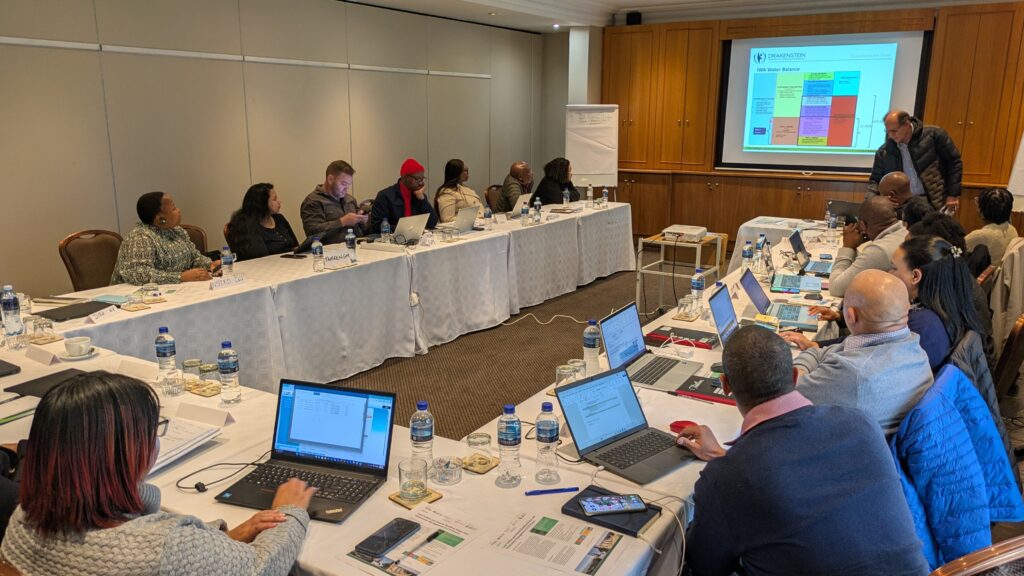
Building on this close cooperation, on 28 May 2025, LCCR Water, in partnership with Drakenstein Municipality, hosted a focused peer exchange on Non-Revenue Water (NRW) management. The event convened key decision-makers from the Finance and Technical Departments of the invited municipalities: George, uMhlathuze, Newcastle, and JB Marks, with the goal of facilitating knowledge-sharing on strategies to effectively reduce NRW.
Drakenstein Municipality, widely recognized as one of South Africa’s best-performing municipalities with NRW levels consistently around 20%, shared their practical approach to managing and maintaining low NRW. Attendees gained valuable insights into Drakenstein’s operational systems and strategic measures that contribute to its strong performance.
Each participating municipality also presented its current NRW situation, with reported levels ranging between 21% and 62%. These presentations highlighted both shared and unique challenges, as well as successful interventions implemented at the local level. A dynamic discussion followed, covering technical topics such as pipe material selection and inventory management, alongside institutional themes including leadership, accountability, and internal capacity development.
A prominent theme that emerged was the growing interest among municipalities in adopting smart water metering technology. Although participants were at different stages of implementation and readiness, there was broad agreement on the potential of smart meters to enhance water management efficiency. George Municipality, recognized for its extensive experience in deploying smart metering technology, invited participants to an on-site demonstration where it will showcase the challenges municipalities may face when implementing smart metering, along with the solutions it has developed. Building on this, LCCR Water will host a follow-up exchange in George focused on smart metering, offering municipalities and partners at national level practical insights for replication and scaling.
Reflecting on the experience, participants emphasized the value of peer learning and collaboration, reaffirming the importance of initiatives like LCCR Water in driving context-specific, scalable solutions for improved water management and climate resilience across South African municipalities.