
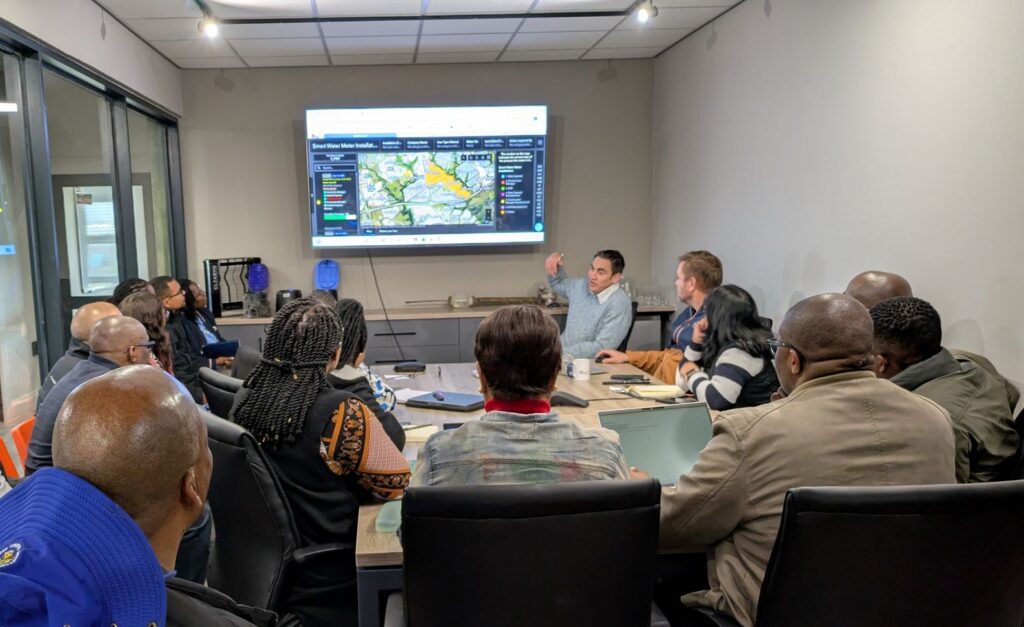
In May 2025, during the Low Carbon and Climate Resilient Water and Wastewater Management (LCCR Water) Peer Exchange on Non-Revenue Water, a clear message emerged: municipalities across South Africa are ready to harness the potential of smart water metering to improve efficiency and reduce water losses.
Building on this momentum, George Municipality, a committed partner of the LCCR Water project and a recognised national leader in smart metering deployment, hosted a focused, on-site peer exchange on 21 August 2025. The event brought together municipal officials, national stakeholders, and academic partners for a practical learning engagement grounded in implementation experience.
Through open dialogue and hands-on exposure, the exchange supported peer-to-peer learning and strengthened the collective effort to build more climate-resilient, low-carbon water systems in South Africa.
Lessons Learned from Smart Metering Implementation
Municipalities participating in the exchange shared several critical insights and lessons based on real-world experience. These takeaways are intended to guide others considering smart metering as a strategy for improved water management.
1. Understand What Makes a Meter “Smart”
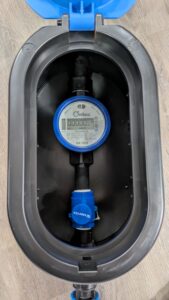
One of the most important clarifications from the exchange was the distinction between smart meters and prepaid meters, which are often confused in municipal contexts. Smart meters are defined by their ability to transmit real-time consumption data. This functionality enables municipalities to detect leaks early, monitor usage trends, improve billing accuracy, and make data-informed decisions. In contrast, prepaid meters are primarily designed for revenue collection and typically do not include remote communication or analytics capabilities.
2. Establish Clear Objectives and Internal Alignment
Smart metering is not a one-size-fits-all solution. Municipalities need to define their objectives clearly at the outset. These may include reducing non-revenue water, improving billing accuracy, managing demand, or achieving a combination of outcomes. It is equally important to align priorities across departments, especially between finance and infrastructure. This coordination ensures that implementation strategies are practical, well-supported, and aligned with available resources.
3. Pilot Technologies Before Scaling Up
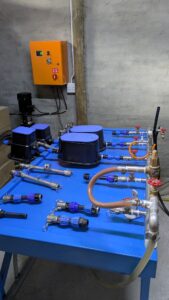
Pilot projects are essential for testing different meter models and assessing performance under local conditions. These pilots can help identify potential challenges such as network connectivity issues, system integration limitations, or maintenance requirements before moving to large-scale deployment.
Field testing enables municipalities to make informed decisions about the suitability of technologies, installation logistics, and long-term operational implications.
4. Prioritise High-Impact Areas
To achieve early impact and build momentum, municipalities should focus initial deployments on areas that offer the greatest benefits. These may include:
- Major water consumers, to enhance revenue collection
- High-pressure zones, to improve demand management
- Areas with high levels of water loss, to reduce non-revenue water
Targeted implementation also helps build internal confidence and provides a foundation for refining strategies before wider roll-out.
5.Realistic Cost
Ensure that cost estimation is realistic as it can vary considerably based on factors like the need to re-establish existing paved driveways.
6. Engage Customers Through Transparent Communication
Effective community engagement is essential to the success of any smart metering initiative. Clear communication about the purpose and benefits of smart meters helps to build public trust and reduce resistance.
One municipality shared its experience of first installing smart meters at the homes of municipal staff and councillors. This approach demonstrated leadership commitment and helped build credibility and acceptance within the broader community.
Discussion Session
During the discussion session, it became clear that while smart water metering holds potential to improve service delivery and reduce system losses, its effectiveness depends on far more than the technology itself. Participants emphasised that successful implementation requires clearly defined objectives, strong internal coordination, and a phased, strategic rollout that accounts for local context and operational realities.
In particular, the discussion highlighted the importance of managing expectations and being realistic about the challenges. The session also reinforced the importance of transparent stakeholder engagement- especially with end users and municipal staff – to build trust and ensure long-term buy-in.
The LCCR Water project extends its sincere thanks to George Municipality for co-hosting this valuable peer exchange, and to all participants for their candid reflections and contributions.
LCCR Water is commissioned by the Federal Ministry for the Environment, Nature Conservation, Nuclear Safety and Consumer Protection (BMUV) through the International Climate Initiative (IKI), and by the Swiss State Secretariat for Economic Affairs (SECO).
