|
South Africa’s water sector stands at a critical crossroads. Climate change is reshaping rainfall patterns, intensifying droughts, and straining ageing infrastructure. The National Climate Change Response Strategy for the Water and Sanitation Sector (NCCRS) was adopted in 2025 by the Minister, which provides the strategic framework within which the Department of Water and Sanitation (DWS) must respond. But strategy alone does not change practice. People do!
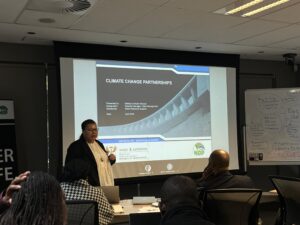
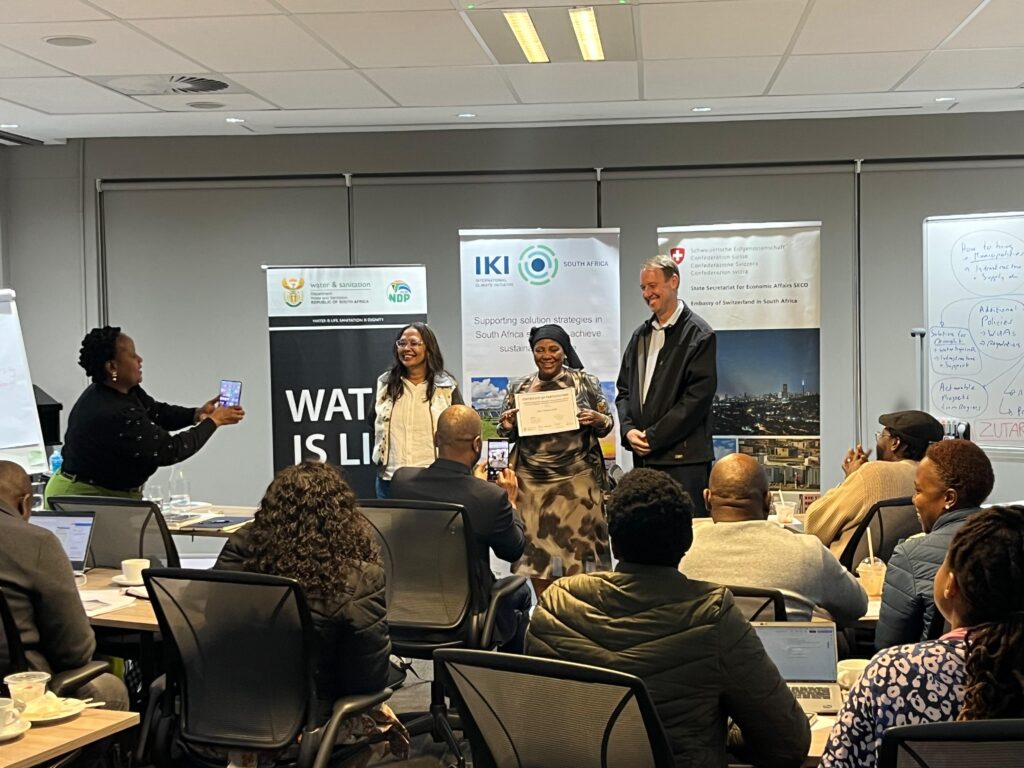
This is the premise behind the Climate Champions Training, held from 15 to 17 April 2026 in Cape Town, a capacity-strengthening initiative jointly developed by the Department of Water and Sanitation (DWS) and GIZ’s Low Carbon and Climate Resilient Water and Wastewater Management (LCCR Water) project. LCCR Water is funded through the International Climate Initiative (IKI) of the German Federal Ministry for the Environment, Climate Action, Nature Conservation and Nuclear Safety (BMUKN), with 50% co-funding from the Swiss State Secretariat for Economic Affairs (SECO). From Strategy to Skill The NCCRS calls for mainstreaming climate resilience across water planning, infrastructure investment, governance, and service delivery. For many practitioners, the distance between a national strategy and day-to-day decisions can feel vast. The training was designed to close that gap — not by simplifying the strategy, but by building the capacity to work with it.
.
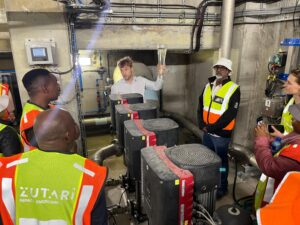
Learning Beyond the Classroom Participants visited the Zandvliet Wastewater Treatment Works – one of the largest in the Western Cape – gaining first-hand exposure to climate-resilient infrastructure at scale and bringing abstract concepts around mitigation and energy efficiency into contact with daily municipal realities. Equally striking was the Century City wetlands — urban natural infrastructure within a dense mixed-use development. Here, participants encountered nature-based solutions as functioning components of urban water management: absorbing stormwater, moderating urban heat, and supporting biodiversity. For practitioners accustomed to grey infrastructure, this carried real reframing value.
A Mixed Picture, and an Honest One Some Climate Champions have moved quickly, applying climate risk framing in institutional planning, raising the profile of NCCRS implementation, and influencing colleagues. For others, structural barriers — high workloads, staff turnover, competing priorities — have slowed translation into practice. This reflects not a failure of training design but the implementation landscape that any serious climate capacity initiative must reckon with. What Comes Next DWS and LCCR Water are exploring how to sustain momentum beyond the formal programme, including the set-up of a Community of Practice platform, with all the provinces and national DWS — a peer network for sharing experiences and troubleshooting barriers. What This Means for IKI South Africa’s water sector needs not just trained individuals but transformed institutions. The NCCRS provides the direction. Initiatives like this one — grounded in national ownership, enriched by international partnership, and brought to life through real infrastructure encounters — build the human and institutional foundations to get there. Thirty people, equally men and women, returning with new frameworks, new networks, and a clearer sense of their role in South Africa’s climate future. The champions already acting are proof of concept. The work now is to expand the conditions that made their progress possible. Lynette Berrington, Senior Technical Advisor, LCCR Water, South Africa |